Tag: # sustainability

  • What is Blown Film? Understanding the Blown Film Process.

    What is Blown Film? Understanding the Blown Film Process.

    If you want to know about what is Blown film then this article is for you. his technical brochure covers some of the most common blown film problems and their probable solutions. It is hoped that the information contained here will be of assistance to you.

    What is blown film?

    Blown film is a type of plastic film made by extruding molten polymer through a circular die, then inflating it like a balloon. As the film rises, it cools and solidifies, creating a thin, continuous tube of plastic that can be flattened and wound into rolls.

    This method is one of the most popular ways to manufacture flexible plastic films for packaging, agriculture, and industrial use. You’ve likely encountered blown film in grocery bags, food packaging, shrink wraps, and even construction sheeting.

    How does blown film work- Explain step by step

    In this process we extrude the material through single screw extruder then melt material

    1. Feeding and Melting the Polymer

    It all begins with plastic resin pellets, often polyethylene (like LDPE, LLDPE, or HDPE), fed into a hopper. These pellets are then pushed through an extruder—a long, heated barrel with a rotating screw.

    As the screw turns, it heats and melts the plastic, creating a uniform molten polymer ready for shaping.

    2. Extrusion Through the Die

    Next, the molten plastic is forced through a circular die, which shapes it into a tube. This is the starting point for the film.

    The diameter of the die and the speed of extrusion help determine the film’s initial size.

    3. Blowing the Bubble

    Here’s where the magic happens.

    Air is blown into the center of the tube, causing it to inflate like a balloon. This bubble stretches the plastic in both the vertical and horizontal directions, giving the film strength and flexibility.

    The ratio of the bubble’s size to the die’s diameter is called the blow-up ratio, a key factor in controlling the film’s properties.

    4. Cooling the Film

    As the bubble rises, it passes through a cooling ring that blows chilled air onto the surface. This step helps solidify the plastic while maintaining its shape.

    In some systems, additional air rings or chillers are used for faster cooling and better film clarity.

    5. Flattening and Winding

    At the top of the bubble, it enters a set of rollers called the nip rollers, which flatten the film into a double layer.

    The flattened film—now called a layflat tube—is wound onto large rolls and later slit, folded, or printed depending on the final application.

    Application of blown film
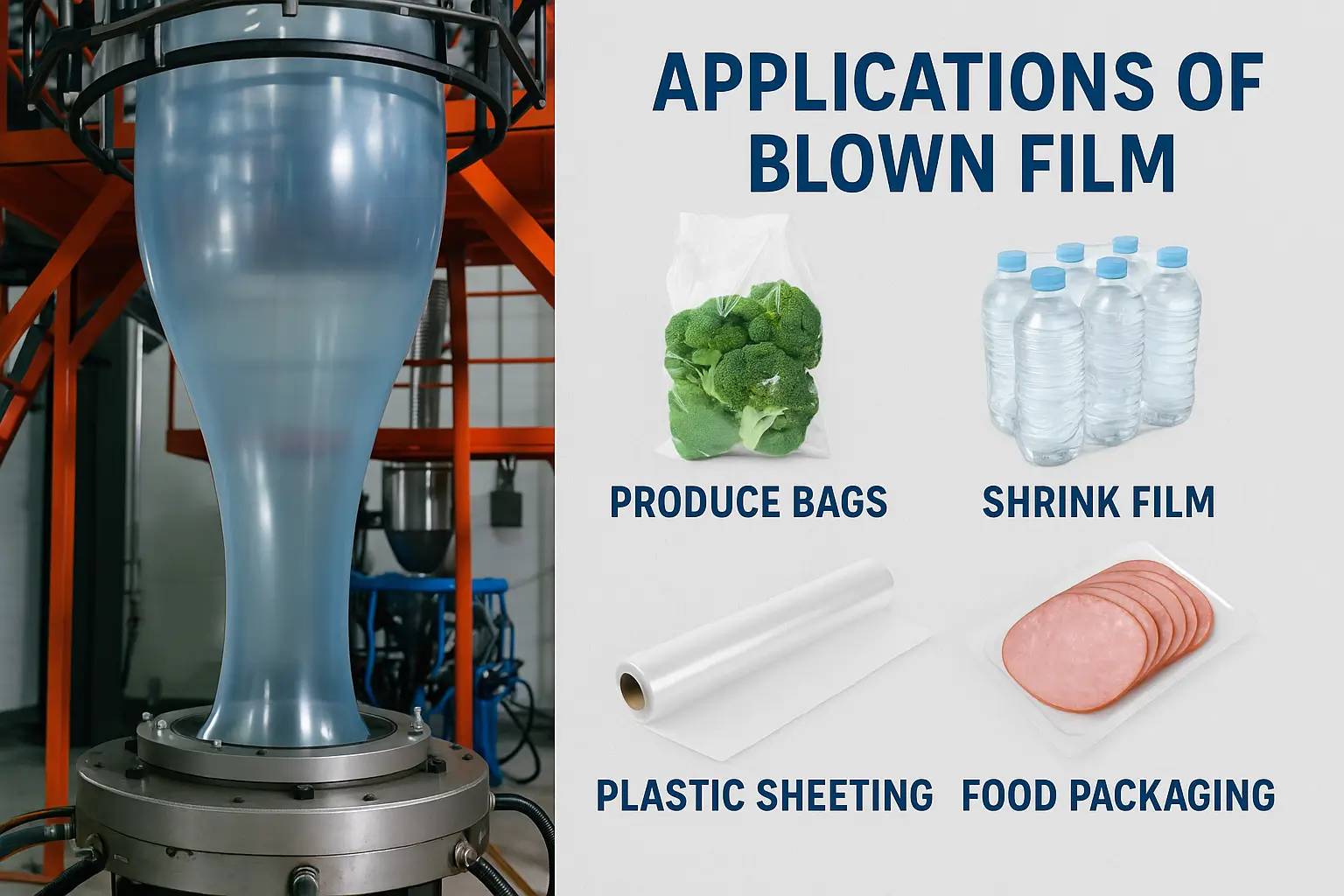
    Application of Blown Film.

    Plastic bags (grocery bags, trash liners, zip-lock bags)

    • Food packaging (snack pouches, frozen food wraps)
    • Shrink film and stretch film
    • Agricultural films (mulch film, greenhouse film)
    • Construction sheeting (vapor barriers, protective covers)
    • Cosmetic packaging (Creem tube, powder, gel)
    • Pharmaceutical sector (tablet outer packaging)

    Because the process allows for precise control over thickness and material composition, it’s ideal for making both single-layer and multi-layer films with tailored properties like strength, barrier resistance, and flexibility.

    Blown film vs cast film

    FeaturesBlown filmCast film
    Equipment CostCheap projectExpensive project
    StrengthLow tensile strengthExcellent tensile strength
    ClarityMedium clarityHigh clarity
    Cooling methodAir cooledRoller cooled
    ProductionModerateFaster
    Gauge controlModerateexcellence
    PrintabilityModerateexcellent visibility

    Advantages of the Blown Film Process

    So, what makes blown film so popular in the plastic industry?

    ✅ Cost-Effective

    Blown film equipment is relatively affordable, and the process is efficient, making it ideal for high-volume production.

    ✅ Versatility

    From thick industrial sheeting to ultra-thin packaging films, blown film can be customized for a wide range of applications.

    ✅ Strength and Uniformity

    The biaxial orientation during the blowing process gives the film balanced strength, making it less prone to tearing.

    ✅ Multi-Layer Capabilities

    Modern machines can co-extrude multiple layers in a single film—adding features like moisture barriers, UV resistance, or color tinting.

    Challenges and Limitations

    Of course, no process is perfect. Blown film does come with some limitations:

    ⚠️ Lower Optical Clarity

    Compared to cast film, blown film may have more haze or cloudiness, depending on the material and cooling method.

    ⚠️ Slower Cooling Time

    Because the film is cooled by air rather than chilled rollers, it may take longer to set, reducing overall speed.

    ⚠️ Difficult to Handle Thin Films

    Making ultra-thin films can be tricky and requires precise control over pressure, temperature, and cooling.

    Final Thoughts: Why Blown Film Matters

    Blown film may seem like a niche manufacturing technique, but its impact is everywhere. From packaging your lunch to protecting crops in a field, blown film plays a vital role in modern life.

    By understanding the blown film process, you’re not only gaining insight into a key industrial technology—you’re also appreciating the engineering behind the plastic products we use every day.

    Whether you’re in manufacturing, product development, or sustainability, knowing how blown film works can help you make smarter decisions about materials, processes, and end-use applications.

    Frequently Asked Questions (FAQs)

    What materials are used in blown film?

    Common materials include LDPE (Low-Density Polyethylene), LLDPE (Linear Low-Density PE), HDPE (High-Density PE), and various co-polymers depending on desired properties.

    Can blown film be recycled?

    Yes! Most blown films made from mono-materials like polyethylene are recyclable. Multi-layer films may be harder to recycle, but advances in technology are helping improve that.

    How thick can blown film be made?

    Typical thicknesses range from 10 to 200 microns, though special films can go beyond that range based on application.

    Can we print in blown film materials?

    Yes, we can easily print in blown film, because during processing of blown film we give a corona treatment to improve surface properties, which is required for printing and lamination.
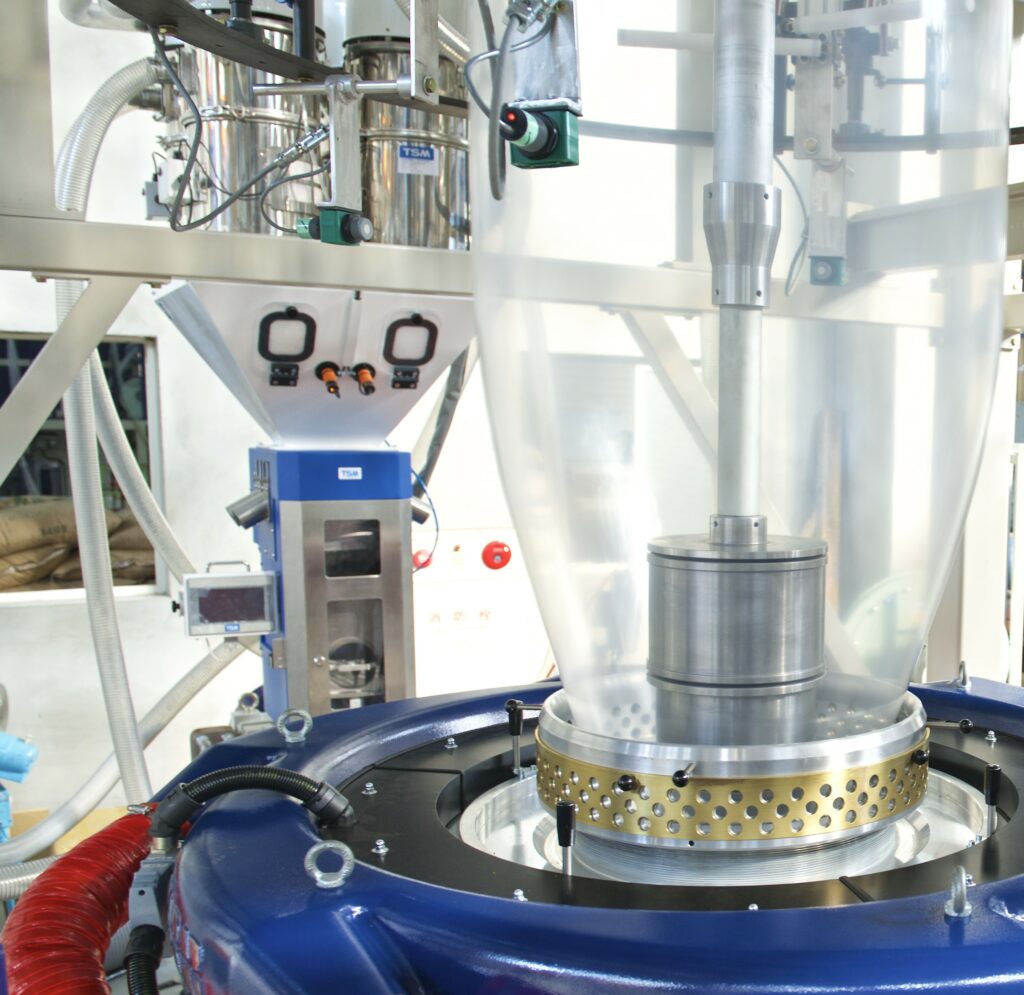
    Blown film extrusion machine showing plastic bubble formation in packaging factory
  • The Evolution of Flexible Packaging Toward Sustainability

    The Evolution of Flexible Packaging Toward Sustainability

    As global environmental concerns intensify, industries are facing increasing pressure to adopt greener, more responsible practices. Packaging, in particular, has come under scrutiny, with single-use plastics often blamed for pollution and landfill overflow. In this landscape, flexible packaging—long valued for its efficiency and cost-effectiveness—is undergoing a major transformation to meet the demands of a more sustainable future.

    This blog explores how flexible packaging is evolving through the use of recyclable materials, biodegradable films, compostable solutions, and its integration into the circular economy.

    ♻️ Recyclable Materials: A Step Toward Closing the Loop

    Historically, flexible packaging has been difficult to recycle because of its multi-layer structure made from a mix of materials like plastic, foil, and paper. These combinations often make it incompatible with conventional recycling systems. However, the industry is now moving toward mono-material solutions that are easier to recycle. Like PE/PE, BOPP/BOPP structure etc.

    Key Developments in Recyclable Flexible Packaging:

    Mono-material films: Made entirely from polyethylene (PE) or polypropylene (PP), these films offer similar performance while being more easily recyclable.

    Clear labeling: Brands are now including standardized recycling symbols to educate consumers about proper disposal.

    In-store take-back programs: Some retailers offer collection bins for flexible plastic packaging, encouraging consumer participation in recycling.

    The shift toward recyclable materials not only reduces waste but also helps brands align with Extended Producer Responsibility (EPR) regulations being introduced in many countries.

    Biodegradable Films: Reducing Long-Term Environmental Impact

    When recyclable infrastructure isn’t available, biodegradable packaging can provide an alternative route to reduce environmental harm. These materials are designed to break down naturally through microbial activity under specific conditions.

    Common Biodegradable Materials Used:

    PLA (Polylactic Acid): Derived from renewable sources like corn starch or sugarcane, it’s compostable and biodegradable under industrial conditions.

    PHA (Polyhydroxyalkanoates): Created through bacterial fermentation of sugars and oils, offering excellent biodegradability even in marine environments.

    Cellulose-based films: Sourced from wood pulp or cotton, these are naturally biodegradable and often used for dry food or hygiene products.

    While promising, biodegradable films need the right conditions to decompose, which aren’t always available in landfill or natural environments. Still, they serve as a valuable solution in controlled settings like industrial composting facilities.

    Compostable Packaging: Supporting Organic Waste Cycles

    Closely related to biodegradable materials, compostable packaging is designed to fully break down into natural components—carbon dioxide, water, and biomass—within a specific timeframe, without leaving behind toxic residue.

    Benefits of Compostable Packaging:

    Reduces landfill burden: By allowing packaging to be processed along with organic waste.

    Lowers carbon footprint: Derived from plant-based sources with a shorter lifecycle.

    Promotes soil health: When fully composted, it can contribute to nutrient-rich compost.

    Standards such as EN 13432 (Europe) and ASTM D6400 (U.S.) help verify whether a packaging product is truly compostable. However, consumer confusion and lack of composting infrastructure remain hurdles. Clear education and policy support are crucial to scaling compostable packaging successfully.

    Flexible Packaging and the Circular Economy

    Sustainability isn’t just about switching materials—it’s about rethinking the entire lifecycle of packaging. The circular economy model focuses on designing out waste, keeping products in use, and regenerating natural systems. Flexible packaging is increasingly being designed to fit within this regenerative model.

    How Flexible Packaging Supports the Circular Economy:

    Design for recyclability: Packaging is created with end-of-life reuse in mind.

    Use of recycled content: Integrating post-consumer recycled (PCR) materials into new packaging to reduce raw material use.

    Resource efficiency: Flexible formats typically use fewer materials than rigid alternatives, cutting energy use and transportation emissions.

    Take-back initiatives: Brands are experimenting with collection and refill programs for pouches and sachets.

    By adopting circular design principles, flexible packaging moves from being part of the waste problem to part of the sustainability solution.

    Industry Innovations and Brand Examples

    Many global brands and startups are leading the charge in sustainable flexible packaging.

    Nestlé has committed to making all of its packaging recyclable, mono material or reusable by 2025. Nestle is also moving towards MDO film which is pe grade is easy recyclable with good barrier properties and excellent tensile strength.

    Unilever is developing fully recyclable mono-material sachets and exploring refill pouches with spout & zipper.

    Notpla, a UK-based company, has developed seaweed-based flexible film that is both edible and home-compostable.

    These innovations demonstrate that sustainability and performance can go hand-in-hand, paving the way for widespread adoption.

    Consumer Education: A Critical Piece of the Puzzle

    Sustainable packaging can only succeed if consumers know how to dispose of it correctly. Mislabeling, misinformation, and the lack of easy disposal options often lead to even the most eco-friendly materials ending up in landfills.

    Best Practices for Brands:

    Include clear disposal instructions on the packaging

    Use QR codes to link consumers to local recycling or composting guidelines.

    Partner with NGOs and governments to support waste management education.

    Empowering consumers with knowledge and tools will significantly improve the impact of sustainable packaging initiatives.

    Innovation & development in flexible packaging.

    • Mostly flexible packaging industry shift towards mono material laminate.
    • Mostly top packaging industry are developing MDO films.
    • Mostly packaging industry shift towards easy recyclable materials.

    ✅ Conclusion: A Greener Path Forward

    Flexible packaging is no longer just about convenience, cost, and shelf life. It’s becoming a key player in the movement toward a sustainable, circular economy. Through the use of recyclable, biodegradable, and compostable materials, and by embracing circular design principles, the industry is making meaningful strides to reduce environmental harm.

    However, the journey doesn’t end here. Continued innovation, infrastructure development, and consumer education are essential for truly sustainable outcomes.

    As businesses and consumers work together, flexible packaging can evolve into a powerful symbol of responsibility and resilience — proving that sustainability and smart packaging can coexist.

    Eco-themed illustration showing a transition from conventional plastic pouches to biodegradable flexible packaging with a green Earth and sprouting leaves in the background.