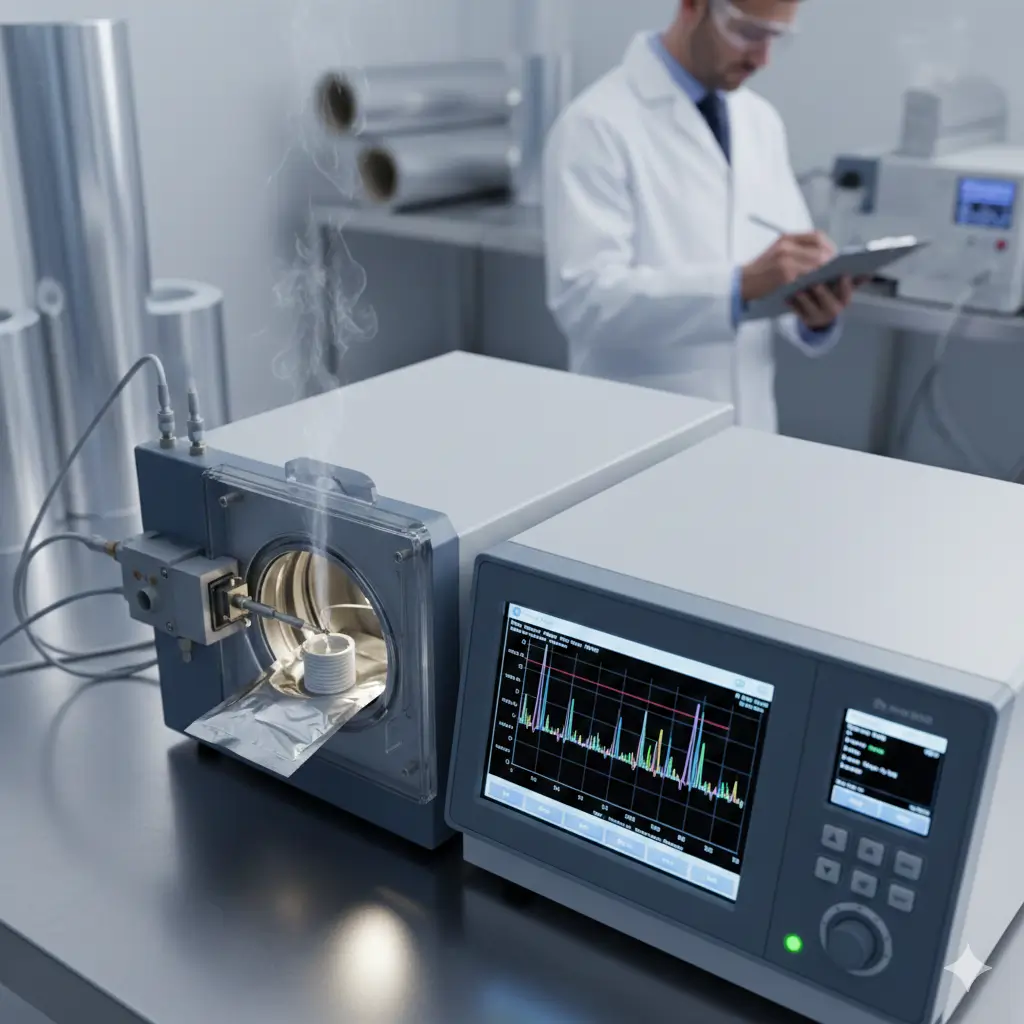
Flexible packaging has become the preferred choice for brands thanks to its lightweight structure, cost efficiency, and sustainability advantages. But as packaging materials get more advanced—with multilayer films, adhesives, inks, and barrier coatings—so does the need for accurate testing. That’s where gas chromatography (GC) steps in.
Whether you're in food packaging, pharmaceuticals, or consumer goods, gas chromatography plays a central role in ensuring your packaging is safe, compliant, and performs the way it should. In this guide, we break down what GC is, how it’s used in flexible packaging, and why it’s essential for modern manufacturers.
Table of Contents
ToggleWhat is Gas Chromatography?
Gas chromatography is an analytical testing method used to separate and measure volatile compounds in a sample. Think of it as a highly sensitive “sniffer” that detects chemicals—even in extremely small amounts.
Here’s the simple version of how it works:
- A tiny sample is injected into the GC system.
- It’s vaporized and carried through a column by an inert gas (like helium).
- As it moves through the column, compounds separate based on how they interact with the material inside.
- A detector identifies each compound and measures its concentration.
Thanks to its precision, GC is widely used in industries where chemical safety and consistency are critical. Flexible packaging is one of them.
Why Gas Chromatography Matters in Flexible Packaging
Flexible packaging materials are made from several layers of films, resins, inks, and adhesives. Each layer contains chemicals that must be carefully controlled. Gas chromatography helps manufacturers answer key questions:
- Are there harmful substances in the packaging?
- Could chemicals migrate into food or pharmaceuticals?
- Are the solvents from inks and adhesives fully evaporated?
- Does the packaging meet regulatory compliance standards?
In short, GC ensures that the packaging you produce—or buy—is safe, high-quality, and fit for purpose.
Common Applications of Gas Chromatography in Flexible Packaging
1. Residual Solvent Analysis
Residual solvents are one of the most common concerns in flexible packaging. They're typically left behind after printing or lamination if curing is incomplete.
Gas chromatography is the gold standard for detecting solvents such as:
- Ethyl acetate
- Isopropyl alcohol
- Toluene
- Ethanol
- Methanol
Even tiny traces can affect food flavor, odor, and safety. GC helps identify and quantify these residues, allowing manufacturers to tweak drying temperatures, curing times, or solvent blends.
2. Odor and Off-Flavor Testing
Ever opened a food pouch and noticed a strange smell? Often, it’s due to volatile compounds released from inks, adhesives, or additives.
GC combined with mass spectrometry (GC-MS) is commonly used to:
- Pinpoint the chemical responsible for the odor
- Trace its origin (specific ink, adhesive, or film layer)
- Prevent future quality complaints
Brands rely heavily on GC-based sensory analysis to maintain consumer trust.
3. Migration Testing
Migration refers to the transfer of chemicals from packaging into the product inside—especially food, beverages, and pharmaceuticals.
GC plays a key role in determining:
- Overall migration: total chemicals that migrate
- Specific migration: targeted contaminants such as plasticizers
- NIAS (non-intentionally added substances) from reactions or impurities
These tests are vital for complying with regulations such as:
- FDA 21 CFR
- EU Framework Regulation 1935/2004
- EU Plastics Regulation 10/2011
If chemicals migrate beyond acceptable limits, the packaging cannot be used. GC ensures safety long before products hit the shelves.
4. Analysis of Volatile Organic Compounds (VOCs)
Many packaging materials emit VOCs. While not all VOCs are harmful, several can cause odor, affect product shelf life, or become health hazards.
GC identifies VOCs coming from:
- Printing inks
- Coatings
- Adhesives
- Polymer degradation
This helps manufacturers reformulate materials to create safer and more consumer-friendly packaging.
Quality Control During Production
In a busy converting plant, consistency is everything. GC is often used for:
- Checking incoming raw materials
- Monitoring solvent mixtures
- Verifying adhesive curing levels
- Ensuring every batch meets specifications
With GC results, operators can make real-time adjustments, reducing waste and improving line efficiency.
Benefits of Using Gas Chromatography in Flexible Packaging
1. Improved Consumer Safety
By detecting harmful chemicals early, GC prevents contamination and protects end users—especially in food and pharma applications.
2. Higher Product Quality
GC helps eliminate issues like:
- Unpleasant odors
- Off-tastes
- Incorrect layer bonding
- Packaging failures
This leads to longer shelf life and better customer satisfaction.
3. Regulatory Compliance
With global regulations tightening, GC makes it easier for manufacturers to stay compliant and avoid costly recalls or rejections.
4. Reduced Production Failures
Early detection of problems—such as incomplete solvent removal—saves time, money, and materials.
5. Enhanced Brand Reputation
Consistent quality and safety build consumer trust. GC testing supports that reputation by ensuring each package meets the highest standards.
How Manufacturers Can Implement Gas Chromatography
1. In-house Testing
Smaller companies can outsource GC analysis to accredited labs. This ensures accurate, unbiased results without heavy investment.
3. Routine Quality Checks
Testing should be done at multiple stages:
- Raw material inspection
- In-process monitoring
- Final packaging validation
Regular testing reduces the risk of defects slipping through the cracks.
Key Challenges in GC for Flexible Packaging
While GC is powerful, it does come with challenges:
- Requires skilled technicians
- Testing can be time-consuming
- Equipment and maintenance are costly
- Results may vary if samples aren’t handled correctly
However, modern GC systems are becoming faster, more user-friendly, and more automated—making them increasingly accessible to packaging companies of all sizes.
The Future of Gas Chromatography in Packaging
As flexible packaging technology evolves, so does the need for advanced testing. Future trends include:
- Faster GC systems for near real-time results
- Automated sample preparation to reduce human error
- Greater use of GC-MS for identifying NIAS
- More sustainability-focused tests for compostable and bio-based films
The demand for safer, greener, and higher-performing packaging means GC will remain a cornerstone of quality control.
Final Thoughts
Gas chromatography may not be visible to consumers, but it plays a crucial role in every flexible package they use. From ensuring solvent-free laminates to preventing harmful chemical migration, GC helps manufacturers deliver safe, consistent, and compliant products.
In an industry where innovation moves fast and regulations continue to tighten, GC provides the clarity and precision needed to maintain trust, protect brands, and keep products safe.